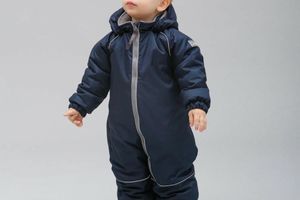
What should your baby wear for a walk so they are neither cold nor too hot? We have put together one table on how to dress a child from +25 to -20 °C, with the DoRechi items designed for each kind of weather.
The temperatures in this guide are a guideline. Always take wind, humidity and how your baby feels into account: a windy, damp day at 0 °C can feel colder than a dry frosty day at -5 °C.
The main rule: dress in layers
Dress your child in layers - it is easier to add or remove one layer when the weather changes or you go indoors.
- Base layer - a breathable cotton bodysuit or rompers.
- Mid layer - a jersey top or thin fleece that keeps the warmth in.
- Outer layer - a snowsuit, jacket or footmuff that protects from wind and moisture.
A baby lying or sleeping in a stroller moves much less than an adult, so they usually need one layer more than you. A toddler who walks and runs, on the other hand, overheats easily and needs about as many layers as you do.
Table: what to dress your child in at different temperatures
| Temperature | What to wear | DoRechi items |
|---|---|---|
| +15 to +25 °C | Base layer and a light top; on windy days a windbreaker and a light hat | Windbreakers (from +15 °C), mid-season jackets (+5 to +25 °C) |
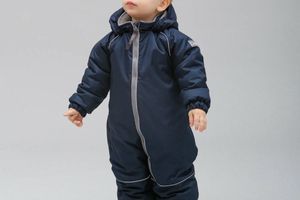
| +5 to +15 °C | Base layer, a top or thin fleece, a mid-season overall or jacket, a knitted hat | Mid-season overalls Eclair and Zefir (+5 to +20 °C), mid-season jackets, mid-season hats and snoods (+5 to +20 °C) |
| 0 to +5 °C | The border between mid-season and winter clothing: go by wind, humidity and whether your baby is sleeping or active | A mid-season outfit with a warmer mid layer, or a winter snowsuit |
| 0 to -10 °C | Base layer, thin fleece or merino wool set, a winter snowsuit, a warm hat, booties and mittens | Apollo and Discovery (+5 to -20 °C), snow bib pants (+5 to -20 °C), booties (approx. +5 to -10 °C), membrane mittens (+5 to -20 °C), winter hats |
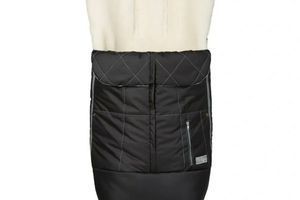
| -10 to -20 °C | The same with a warm mid layer; in the stroller add a winter footmuff; a snood that covers the neck; shorter walks | Apollo, Discovery, snow bib pants, Baby XS or Trend footmuff (+5 to -20 °C) |
| below -20 °C | The same with warm socks or tights; additionally, if you are using the Baby XS footmuff, we recommend adding an Eclair or Zefir mid-season overall. | Apollo, Discovery, Mid-season overalls Eclair and Zefir, Baby XS or Trend footmuff |
How to dress your baby at +21, +17, +15, +10, +5 and 0 °C
Quick tips for the most common temperatures. Add one layer for a baby lying in a stroller; a child who runs around needs as many layers as you do.
How to dress your baby at +20 to +25 °C (e.g. +21 °C)
Light cotton clothes: a bodysuit or T-shirt, thin trousers and a light sun hat. Take a sweater or a windbreaker for the evening or in case of wind. A baby in a stroller needs only a thin muslin or a light blanket, and a stroller sun shade protects from the sun.
How to dress your baby at +15 to +19 °C (+15, +16, +17 °C)
A base layer, a light sweater and trousers; in windy weather add a windbreaker (our windbreakers are made for +15 °C and up) and a light cotton hat. A baby sleeping in a stroller in the shade or wind will need a mid-season suit or a blanket.
How to dress your baby at +10 to +14 °C
A base layer, a sweater or thin fleece, a mid-season suit or mid-season jacket and a knitted hat. Good choices: Eclair and Zefir suits (+5 to +20 °C), mid-season jackets (+5 to +25 °C), mid-season hats and snoods (+5 to +20 °C).
How to dress your baby at +5 to +9 °C
The same as at +10 °C, but with a warmer middle layer and a snood that covers the neck. If it is windy and damp, or your baby sleeps in the stroller, it is time to switch to winter clothes.
How to dress your baby at 0 to +4 °C
This is the border between mid-season and winter clothes. An active child is fine in a mid-season outfit with a warm middle layer; a baby in a stroller needs a winter snowsuit or footmuff. Apollo and Discovery winter snowsuits and Baby XS and Trend stroller footmuffs are made for +5 to -20 °C.
How to dress your baby at -5 to -10 °C
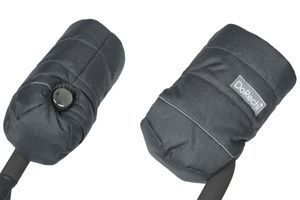
A base layer, thin fleece, a winter snowsuit, a warm hat, a snood, booties and mittens. Add a winter footmuff for a baby sleeping in the stroller, and a stroller hand muff for mum.
How to dress your baby at -15 to -20 °C
The same as at -10 °C, but with a warm middle layer and warm socks; a winter footmuff is a must for sleeping in the stroller. In hard frost check more often that your baby is warm (see how below).
Newborns and babies in a stroller
A baby under one year spends most of the walk lying down or sleeping. A winter stroller footmuff wraps them on all sides and keeps the warmth in while they are not moving. The Baby XS fleece footmuff is designed for +5 to -20 °C and fits from birth to 9-10 months. For older babies who already sit in the stroller there are Trend footmuffs - from 6 months to 3 years.
The Discovery snowsuit (height 56-74 cm) grows with your baby: first it is a footmuff with joined legs and closed cuffs, later the legs separate and the cuffs fold back. We explain the difference between sheepskin and fleece footmuffs in sheepskin or fleece, and how to pick a model in how to choose a winter footmuff.
Your child walks: a winter snowsuit
Once your baby starts walking, they need a snowsuit that is easy to move in and does not mind a sit in the snow. Apollo (height 74-98 cm) has a 7 000 mm / 5 000 g/m² membrane, Hollowsoft 300 g/m² insulation, Polar fleece on the chest and back, foot loops and reflective details. For children 92-104 cm tall there are snow bib pants with Thermoloft Active 200 insulation and adjustable straps, worn together with a jacket.
Do not put too many layers under a membrane snowsuit: a membrane works best when moisture from the body can escape. Read more in how to choose a winter snowsuit.
Head, hands and feet
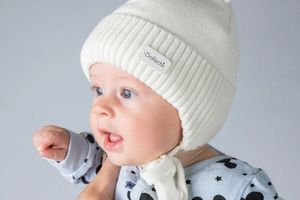
- Hat. In autumn - a mid-season hat in cotton rib knit (+5 to +20 °C), in winter - a warm merino-blend hat with a cotton lining. DoRechi hat sizes are the head circumference in centimetres. See all models in winter hats for babies.
- Snood. Easier than a scarf: nothing to tie, and it covers the neck.
- Booties and mittens. Membrane mittens with fleece are designed for +5 to -20 °C, membrane booties with fleece for approx. +5 to -10 °C, knitted merino mittens for +5 to -10 °C. Booties fit from birth to 18 months, mittens up to 24 months. See accessories.
- For parents. To keep your hands warm on the stroller handle there are stroller hand muffs - more in why you need a hand muff.
How to check that your baby is warm enough
- Touch the neck or the back between the shoulder blades: warm, dry skin means all is well.
- A cool nose and hands alone do not mean your child is cold.
- A sweaty neck, red cheeks and fussiness are signs of overheating: remove a layer.
- A cold neck and back mean your baby is cold: add a layer or head home.
When you go into a shop or public transport, unzip the snowsuit or footmuff so your child does not sweat and then get cold outside.
Car seat safety
Do not buckle your child into a car seat in a bulky winter snowsuit: air stays between the body and the harness, and the straps cannot hold as tightly as they should. Take the snowsuit off, buckle your baby in and cover them with a footmuff or blanket on top.
Frequently asked questions
How many layers does a child need in winter?
Usually three: a cotton base layer, a warm mid layer (fleece or jersey) and a winter snowsuit or footmuff on top. A baby in a stroller needs one layer more than you, an active child about as many as you.
At what temperature does a child need a winter snowsuit?
DoRechi mid-season overalls are designed for +5 to +20 °C, the winter Apollo and Discovery for +5 to -20 °C. So from about +5 °C and below, especially in windy and damp weather, it is time to switch to winter kids' snowsuits.
Does my baby need a footmuff if they already wear a winter snowsuit?
For a baby sitting or lying in a stroller in frosty weather, a footmuff is an extra layer that blocks the wind and keeps the warmth in. See the models in winter stroller footmuffs.
How do I know my child is overheating?
A sweaty neck or back, red cheeks and fussiness are the first signs. Remove one layer and unzip outerwear indoors.
See all models in kids' snowsuits, winter stroller footmuffs, winter hats and booties and mittens.